
How Integrated PV Platforms Improve Signal Detection Accuracy

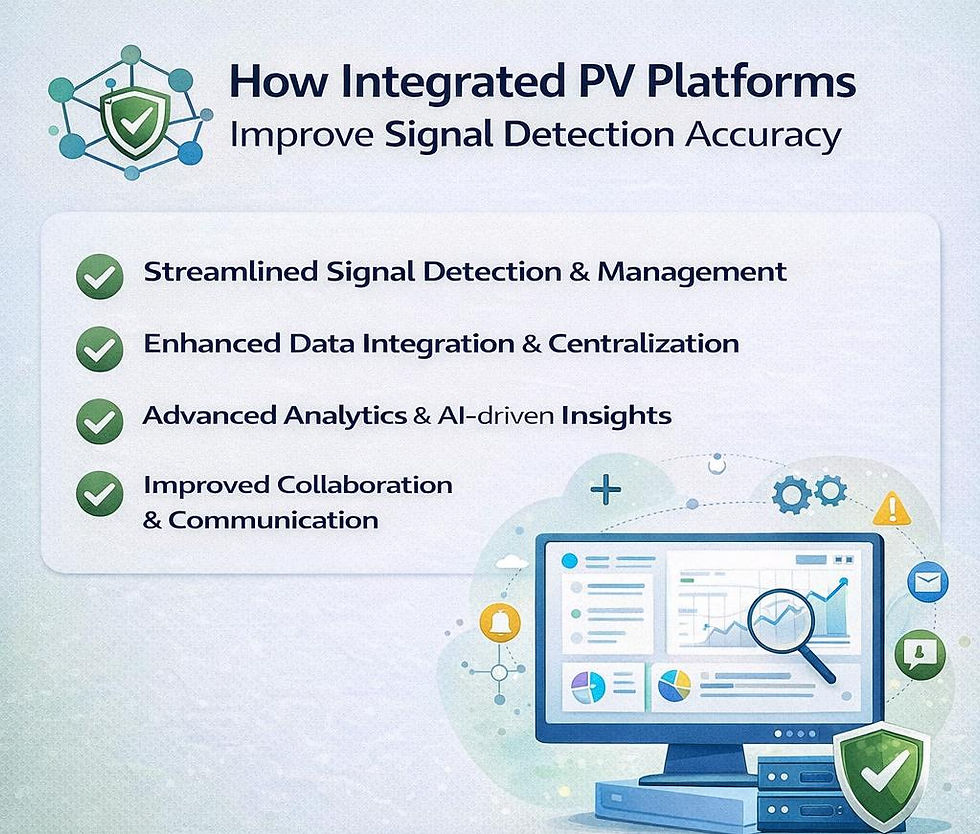
Signal detection lies at the heart of pharmacovigilance. It is the process through which scattered safety data points are transformed into meaningful insights that can protect patients and guide regulatory action. In an increasingly complex healthcare ecosystem, where safety information flows from multiple sources, the accuracy of signal detection has never been more critical.
Traditionally, pharmacovigilance systems have operated in silos. Case processing, literature monitoring, aggregate reporting, and quality management often function as separate units, each generating valuable but disconnected data. This fragmentation creates blind spots, delays insights, and increases the risk of missing early safety signals.
Today, integrated pharmacovigilance platforms are changing this landscape. By bringing together diverse data streams into a unified ecosystem, these platforms enable more accurate, timely, and actionable signal detection. Among the leaders driving this transformation is Tesserblu, whose AI-powered solutions are designed to integrate workflows, enhance data quality, and improve decision-making across the pharmacovigilance lifecycle.
In this blog, we explore how integrated PV platforms improve signal detection accuracy and why solutions like Tesserblu are becoming essential for modern pharmacovigilance operations.
The Complexity of Modern Signal Detection
Signal detection is no longer limited to analyzing spontaneous adverse event reports. Today, safety data originates from multiple sources, including clinical trials, post-marketing surveillance, scientific literature, real-world evidence, and even digital health platforms.
Each of these sources provides a piece of the safety puzzle. However, when data is fragmented across systems, it becomes difficult to connect these pieces effectively. Important correlations may be missed, and emerging signals may remain hidden within isolated datasets.
Moreover, the volume of data continues to grow exponentially. Manual analysis is no longer sufficient to keep pace with this expansion. Without integration and automation, pharmacovigilance teams face increasing pressure to process large datasets while maintaining accuracy and compliance.
Integrated PV platforms address these challenges by creating a centralized environment where data can be aggregated, analyzed, and interpreted holistically.
Breaking Down Data Silos
One of the most significant advantages of integrated platforms is their ability to eliminate data silos. When case data, literature findings, and other safety inputs are stored in separate systems, it becomes difficult to identify patterns across datasets.
Integration allows these data sources to be connected, enabling a more comprehensive view of safety information. For example, a trend observed in spontaneous reports can be validated against findings from literature monitoring or clinical studies. This cross-referencing enhances confidence in signal detection and reduces the risk of false positives or missed signals.
Tesserblu plays a key role in this integration by connecting pharmacovigilance workflows within a unified platform. By enabling seamless data flow between processes, Tesserblu ensures that all relevant information is considered during signal evaluation.
Enhancing Data Quality and Consistency
Signal detection accuracy depends heavily on data quality. Inconsistent, incomplete, or duplicated data can distort analysis and lead to incorrect conclusions.
Integrated platforms improve data quality by standardizing data capture and processing. Automated validation checks ensure that data is complete and consistent before it is used for analysis. Duplicate detection mechanisms help eliminate redundant entries, while structured data models enable uniform interpretation across datasets.
Tesserblu’s AI-driven capabilities further enhance data quality by extracting and structuring information from unstructured sources such as scientific literature. By converting text into actionable data, Tesserblu ensures that valuable insights are not lost due to format limitations.
This improved data quality forms a strong foundation for accurate signal detection.
Leveraging Advanced Analytics and AI
The complexity and scale of modern pharmacovigilance data require advanced analytical tools. Integrated platforms leverage artificial intelligence and machine learning to identify patterns, detect anomalies, and prioritize potential signals.
AI can analyze large datasets far more efficiently than manual methods. It can identify subtle correlations that may not be immediately apparent to human reviewers. This capability is particularly valuable for early signal detection, where patterns may be weak or emerging.
Tesserblu’s AI-powered solutions are designed to support this advanced analysis. By combining natural language processing with machine learning, Tesserblu enables intelligent data extraction, classification, and prioritization. This ensures that safety teams can focus on the most relevant and high-risk signals.
Importantly, AI does not replace human expertise. Instead, it enhances it by providing data-driven insights that support informed decision-making.
Real-Time Monitoring and Continuous Surveillance
Timeliness is a critical factor in signal detection. Delays in identifying safety signals can have serious implications for patient safety and regulatory compliance.
Integrated platforms enable real-time monitoring of safety data. Instead of relying on periodic reviews, organizations can continuously analyze incoming data and detect signals as they emerge.
Tesserblu supports this continuous surveillance model by integrating automated workflows and real-time analytics. As new data enters the system, it is immediately processed and evaluated, ensuring that potential signals are identified without delay.
This proactive approach not only improves accuracy but also strengthens the organization’s ability to respond quickly to emerging risks.
Improving Collaboration and Decision-Making
Signal detection is a collaborative process that involves multiple stakeholders, including safety scientists, clinicians, epidemiologists, and regulatory professionals. Effective collaboration requires access to consistent and comprehensive data.
Integrated platforms provide a shared environment where all stakeholders can access the same information. This improves communication, reduces duplication of effort, and ensures that decisions are based on a unified understanding of the data.
Tesserblu enhances collaboration by providing centralized dashboards and integrated workflows. Teams can review data, analyze trends, and make decisions within a single platform, improving efficiency and alignment.
Better collaboration leads to more informed decisions, which in turn improves the accuracy of signal detection.
Strengthening Regulatory Compliance
Regulatory authorities expect organizations to have robust systems for signal detection and risk management. This includes the ability to demonstrate how data is collected, analyzed, and used to identify safety signals.
Integrated platforms support compliance by providing clear documentation and traceability. Every step of the signal detection process is recorded, creating an audit trail that can be reviewed during inspections.
Tesserblu’s platform ensures that all activities are documented and traceable, from data ingestion to signal evaluation. This transparency not only supports compliance but also builds confidence in the organization’s pharmacovigilance system.
Reducing False Positives and Missed Signals
One of the key challenges in signal detection is balancing sensitivity and specificity. Systems must be sensitive enough to detect potential signals but specific enough to avoid false positives.
Fragmented systems often struggle with this balance, as incomplete data can lead to inaccurate conclusions. Integrated platforms improve this balance by providing a more comprehensive dataset for analysis.
Tesserblu’s AI-driven prioritization further enhances this capability. By focusing attention on high-probability signals, the platform reduces noise and helps safety teams concentrate on meaningful insights.
This reduction in false positives and missed signals is critical for maintaining both efficiency and accuracy.
Driving a Proactive Pharmacovigilance Strategy
Integrated PV platforms enable organizations to move from reactive to proactive pharmacovigilance. Instead of responding to issues after they occur, teams can anticipate risks and take preventive measures.
By analyzing trends and patterns across integrated datasets, organizations can identify potential safety concerns early. This allows for timely interventions, such as label updates, risk minimization measures, or further investigations.
Tesserblu supports this proactive approach by providing real-time insights and predictive analytics. This empowers organizations to stay ahead of emerging risks and enhance patient safety.
Future-Proofing Signal Detection
As pharmacovigilance continues to evolve, the importance of integration will only increase. New data sources, such as real-world evidence and digital health technologies, will add to the complexity of signal detection.
Integrated platforms provide the flexibility and scalability needed to adapt to these changes. By leveraging AI and automation, organizations can manage growing data volumes without compromising accuracy.
Tesserblu’s forward-looking approach ensures that organizations are prepared for the future. By combining advanced technology with deep domain expertise, Tesserblu enables a resilient and scalable pharmacovigilance system.
Conclusion: Enhancing Signal Detection with Tesserblu
Accurate signal detection is essential for protecting patients and maintaining regulatory compliance. In a data-rich environment, fragmented systems are no longer sufficient to meet this challenge.
Integrated pharmacovigilance platforms offer a powerful solution by connecting data sources, enhancing data quality, and enabling advanced analytics. With AI-driven capabilities and seamless workflow integration, Tesserblu is at the forefront of this transformation.
By improving accuracy, reducing noise, and enabling real-time insights, Tesserblu helps organizations build a proactive and efficient signal detection framework. In doing so, it not only strengthens compliance but also advances the ultimate goal of pharmacovigilance — ensuring patient safety.
In a world where data complexity continues to grow, integration is not just an advantage — it is a necessity. With Tesserblu, organizations can embrace this future with confidence, transforming signal detection into a strategic strength. Book a meeting if you are interested to discuss more.


Comments